


US Gambling Tax Changes Hitting Soon - What You Need to Know

Introduction
Starting on January 1 2026 some big new changes are confirmed for US gamblers as part of President Trump's One Big Beautiful Bill Act. Tax reporting rules for gambling jackpots - long an annoyance for smaller jackpot winners and Las Vegas casino - are loosening. Which is widely considered to be a good move for the business. However, on the other hand, the bill is also limiting the amount of gambling losses deductible from taxes. This is a huge deal for the estimated 100,000 professional gamblers in the US, and any high income individuals who gamble thousands a year or more recreationally. So what exactly are these changes, and what's the key info gamblers and gambling business insiders need to know?
This article will look at each development, going over a concise but comprehensive summary of the changes entailed. Then it will discuss the arguments for and against the changes, and how the situation developed to the passing of the legislation, before analyzing what the future impacts and developments that might occur because of them.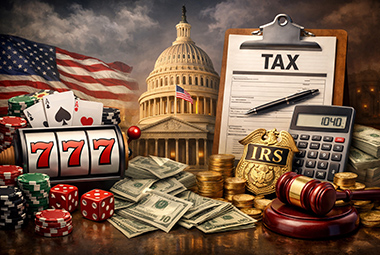
The Automatic Hand-Pay Tax Reporting Threshold for Gambling Jackpots is Increased
Any American gambler who's ever hit a prize of more than $1200 on a slot machine - or worked in a large casino - can tell you the often unexpected hassle that occurs when someone hits such a win. Players might expect some form filling for a $100,000-plus win. But currently, any win of $1200 or more requires a casino attendant to come and hand pay the winnings after the lucky player fills out an IRS tax form. This can lead to a slot being offline for up to 45 minutes in some more complicated cases - which is not good for business of players.
At an online casino like https://casino.zonder-cruks.com/ this isn't a problem at all. Any winnings, small or big, are processed within 24 hours to your chosen payment method. Plus, they have a great selection of slots from globally-respected developers to try your luck on. Easy.
From January 1 2026, the new rules come into effect, which up the limit that a hand pay and tax form is needed for to $2000. People will still be responsible for filing their gambling income, if over the threshold, but it will be on them to report at the end of the year rather than directly after the jackpot win.
Gamblers, gambling business leaders and Nevada's politicians welcomed this change in general. The limit hadn't changed since 1977, so calculating for inflation it was well behind the times. However, some say it didn't go far enough and that the limit should be $10,000 or more. One group who probably didn't welcome the change are slot attendants. Less hand pay jackpots mean less tips and possibly less work, which could even lead to job cuts.
Gamblers Loss Deduction Cut to 90% - Losing Gamblers Could Now Pay Taxes
This is, arguably, the bigger change out of the two. Under current IRS rules, gamblers whose taxable income from it meets the threshold are allowed to deduct their losses from tax payments.
Imagine if you took out $10,000 for gambling, spent $5000 of it, won that $5000 back and then at the end of your session put $10,000 back into your bank. Right now, you wouldn't owe any taxes to the IRS despite "making" $5000 along the line. You could simply mark off the $5000 lost as untaxable income - because you lost it.
However, under the new changes, in such an example you will now owe Uncle Sam $500. Despite not making any profit. You will only be able to mark of 90% of the $5000 you lost ($4500), so you will be paying taxes on money you didn't keep.
Understandably, many professional gamblers, gambling operators and politicians in places with a lot of gambling business (including Nevada Representative Dina Titus) are very concerned about this. With razor tight margins for people like low level pro poker players, the extra tax on a losing year could be a real financial burden. There has been a concerted effort to lobby a change in this rule, but no dice so far.
Politicians who voted for the bill say it puts gambling in line with other activities that are tax deductible and could raise the government several billion a year in new tax revenue.
How Big is the Impact of These Changes, and Where Do Things Go From Here?
The changing of the slot jackpot incoming reporting will save lucky and mid-tier gamblers some hassle when they hit a decent win. It will save casinos money too, and enable slot floors to be more efficient.
It might not be so good for slot attendants at Las Vegas casinos. But at the moment table game play is closer to income parity against slots as the main revenue driver for Sin City than it has since before the rise of video slots in the 1990s. So slot attendants may already be feeling the pinch, as less slot playing mass market customers are visiting the city right now.
The change the loss deductible cap for gamblers won't be felt much by casual players. But for a small section of high limit and elite gamblers like pro poker players and rich baccarat fans, the tax could really bite. And their spending is making up an increasing percentage of Las Vegas' income in recent times. Campaigns continue against it, but haven't got anywhere so far. Although, President Trump has mooted getting rid of gambling taxes entirely - so it's possible.
Comments
No comments for this articleRelated Articles:
-

Gambling in Jail
Jul 14, 2011 -
The Allure of Gambling
Aug 08, 2015 -
People in Gambling #1
Feb 04, 2016 -
People in Gambling II
Mar 26, 2016 -
People in Gambling III
Apr 01, 2016 -
Convenience Gambling
May 24, 2016