

How Michigan Fits Into the Wider State-by-State Casino Market

Introduction
The U.S. online casino market still looks bigger from a distance than it does up close. From the outside, it is easy to imagine one national digital space where casino platforms compete on equal terms everywhere. In reality, that is not how the market works. Online casino access in the U.S. is still built state by state, with different legal frameworks, regulator oversight, tax structures, and operator rosters shaping what users can actually access. That is exactly why Michigan matters. It is one of the clearest examples of what a large, regulated state market can look like once online casino gaming has time to scale. 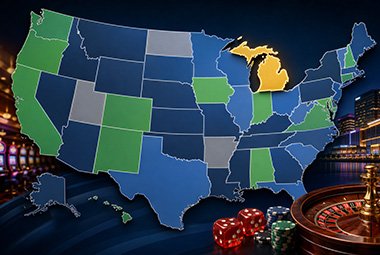
The U.S. online casino market is still built state by state
The most important point is also the simplest one: online casino access in the U.S. is not national by default. It depends on whether a state has approved and structured the market in the first place. The Michigan Gaming Control Board states that it licenses and regulates online gaming operators, which makes the local framework impossible to ignore. That same state-based logic explains why a category that looks fully digital still behaves like a jurisdiction-by-jurisdiction market.
That is what makes online casinos in michigan such a useful example. Michigan is not just another state with internet access and casino brands visible on a screen. It is a regulated market with its own rules, approvals, and operator ecosystem. The technology may look borderless, but the actual product is still shaped by local law.
Why Michigan stands out inside that system
Michigan stands out because it helps make the larger U.S. picture easier to understand. It is not the only important regulated market, but it is one of the strongest illustrations of how state-level online casino access can mature into something substantial. A large population base, multiple licensed brands, and a clear regulator all help turn it into more than a niche example.
That wider context matters because, as the Associated Press has noted, only seven U.S. states currently offer legal online casino games. So Michigan does not sit inside a crowded national field where every state operates the same way. It sits inside a relatively small club of states where legal online casino play is even possible at all.
You can see the local dimension even more clearly when discussion shifts from regulation to user perspective. On Wizard of Vegas, conversations around Michigan online casinos reflect that same state-specific focus. Players are not talking about one unified U.S. online casino environment. They are talking about Michigan as its own market, with its own availability, expectations, and practical realities.
That is why Michigan fits so neatly into the wider state-by-state casino story. It shows what happens when a digital gambling market grows inside a local regulatory framework instead of a national one. The internet may make casino access look frictionless, but the real structure underneath is still local. Michigan does not break that pattern. It helps explain it.
