


How Random Number Generators Support Fairness in Casino Games

Introduction
This article examines how random number generators (RNGs) contribute to perceptions of fairness in casino games, detailing their function, role in game design, and the oversight processes that support fair play for all participants—including in both land-based and online environments such as 711casino.com.
Every time you spin a slot or place a bet at a digital table, you rely on one crucial principle: randomness. For both newcomers and seasoned players, trust in the unpredictability and independence of game outcomes is essential. This is where random number generators (RNGs) play a foundational role. An RNG is a hardware or software system designed to produce unpredictable results so that outcomes are not determined by skill or outside influence. Understanding how these systems operate can help clarify what supports perceptions of fair casino play.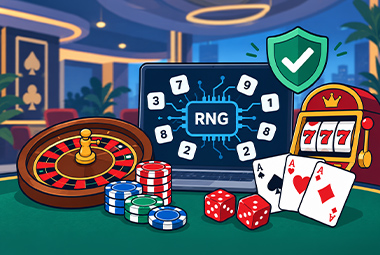
How random number generators work
Casino games typically use software-based pseudorandom number generators or, in some systems, hardware-based sources of randomness. These systems generate values that are translated into game outcomes according to predefined rules and probabilities. This process is intended to make each result independent and unpredictable from previous games.
It's important to address two common misconceptions. First, properly implemented RNGs are designed to prevent players from predicting future results or exploiting patterns. Second, outcomes in conventional RNG-based games are determined according to the game's programmed rules and random selection process. The precise timing and method of selecting an outcome can vary between systems.
Differences between land-based and online games
In traditional slot machines, a computer manages the stopping positions of reels based on the generated value. The RNG software determines which symbols appear on each spin, ensuring that payouts align with the game's programmed odds. Online casinos also use RNGs, typically hosted on secure servers, to drive outcomes for slots, video poker, and digital table games. The core principle remains the same: results are determined through a random selection process according to the game's programmed rules.
Physical table games such as roulette and card-based blackjack may instead rely on mechanical processes or shuffled cards, rather than software RNGs, to generate outcomes.
Fairness, house edge, and game design
In RNG-based casino games, fairness depends on outcomes being generated unpredictably and in accordance with the game's published rules and probabilities. Randomness alone does not guarantee that the paytable is favorable to the player or that the software has been implemented correctly.
Casino games are designed with a built-in house edge through the paytable or rules, not by manipulating the RNG. Elements such as return-to-player (RTP) rates and volatility impact the overall experience, but do not alter the fundamental unpredictability provided by the RNG. The underlying software is designed to ensure that the odds of outcomes, from large wins to losing streaks, reflect the probabilities set by the game's design.
Oversight and independent verification
To protect players, independent test labs may audit RNGs used in both physical and online games. These auditors examine number distributions, randomness, and anti-tampering measures. In many regulated jurisdictions, gaming authorities require that software pass certification before games are approved for commercial use.
In regulated markets, independent testing laboratories may evaluate RNG performance, statistical distributions and the mapping of random values to game outcomes. The UK Gambling Commission, for example, requires game and RNG testing by approved test houses before relevant remote gambling products are released for play.
For players, confidence is supported by knowing such oversight mechanisms may be in place.
Common myths and what really matters
Some players believe in so-called "hot" or "cold" machines, or try to time their spins for better odds. In properly implemented games with independent random outcomes, past results do not make particular future outcomes more likely. Players cannot reliably improve their odds by chasing patterns or attempting to time individual spins. While technical problems or rare instances of tampering can occur, regulatory oversight and periodic testing are intended to identify and address such issues.
What players can check for reassurance
If you want to confirm a game's approach to randomness and fairness, look for public indicators such as references to independent lab audits, published RTP figures, and licensing disclosures. Many platforms share these details. Ultimately, transparency and oversight, rather than intuition or superstition, are the clearest indicators of whether a casino game is run in a manner most would consider fair.
Even properly tested RNG-based games retain their stated house advantage, so randomness and fairness should not be confused with an expectation of winning. Gambling should be treated as entertainment rather than a way to make money.
